When Trees Become Liabilities Rather Than Assets
Tree Removal for diseased, damaged, or hazardous trees that compromise property safety and usability
Trees decline due to root disease, trunk decay, repeated storm damage, or invasive pest infestation that weakens structural integrity beyond what pruning or treatment can restore. Complete removal becomes necessary when the cost and risk of maintaining a failing tree exceed the value it provides to the property. Tree removal by Whits End Tree Care addresses situations where disease has progressed too far for recovery, structural damage threatens nearby buildings, or property development requires clearing specific areas. Projects range from small ornamental trees near foundations to large mature specimens that require specialized equipment and techniques.
The removal process begins with site evaluation to determine the safest cutting approach, whether that involves directional felling in open areas or sectional dismantling near structures and obstacles. Specialized equipment including chainsaws, rigging systems, and chippers allows efficient completion while protecting surrounding landscaping, hardscaping, and structures from collateral damage during the work.
Request a tree removal estimate to evaluate options for addressing failing or hazardous trees on your property.
Safe tree removal requires evaluating the tree's lean direction, identifying weak points in the trunk that could cause unpredictable splitting during cuts, and planning fall zones that avoid structures, utilities, and landscape features worth preserving. Whits End Tree Care manages projects of all sizes, from trees that can be felled in a single cut to complex removals requiring crane assistance or piece-by-piece dismantling from the top down. Ground protection measures prevent equipment damage to lawns and prevent soil compaction in areas where future planting is planned.
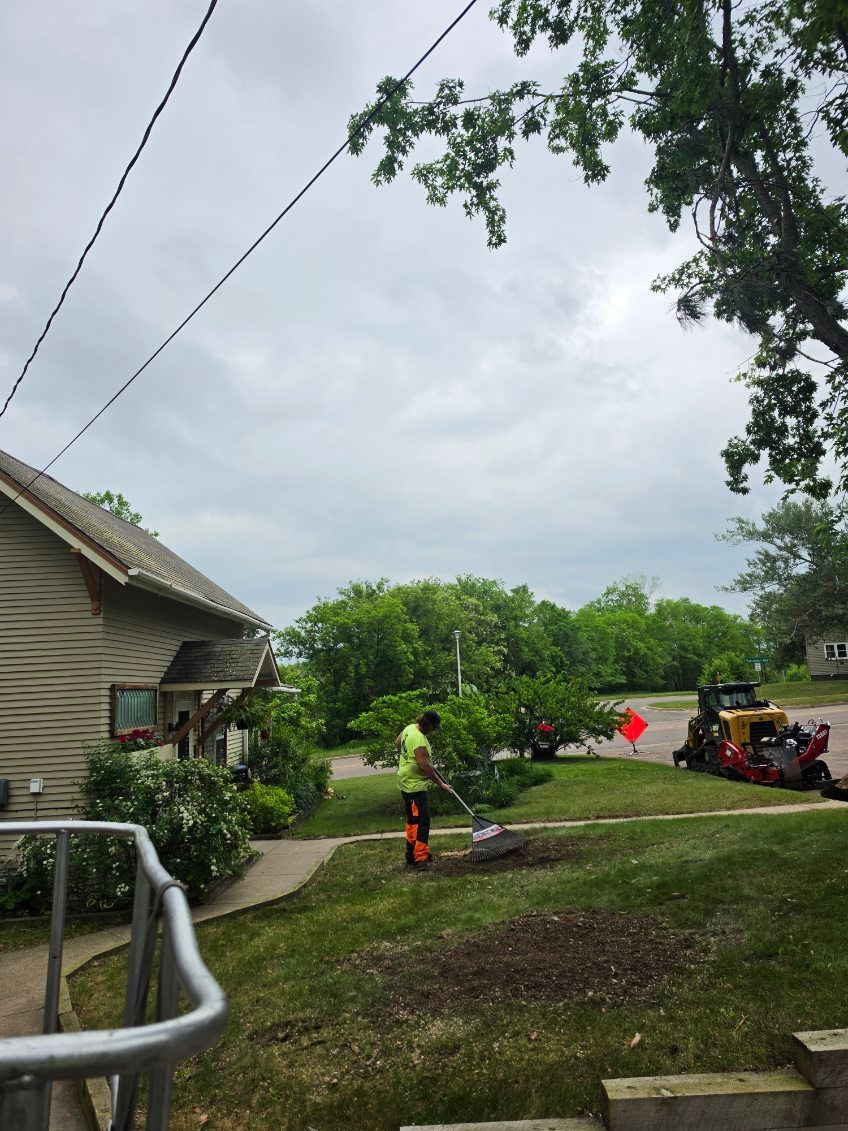
Once removal is complete, you'll observe improved sight lines and light penetration across previously shaded areas, elimination of the overhead hazard that required constant monitoring, and cleared space for alternative landscaping or expanded usable yard area. All wood debris is processed through chippers or hauled off-site, and the work area is cleared of branches, bark, and sawdust.
Tree removal pricing varies based on tree size, location complexity, and whether obstacles require rigging or crane work rather than simple felling, with stump grinding available as an additional service to grind remaining root structure below grade level for replanting or lawn restoration. Removal does not automatically include stump grinding unless specifically requested as part of the project scope.
Common Questions Before Tree Removal
Homeowners and property managers throughout Brainerd ask about the removal process, timing considerations, and what to expect during and after the work is completed.
What are common reasons trees need removal?
Structural failure from storm damage, disease progression that compromises trunk integrity, root system failure that causes leaning, proximity to structures where roots damage foundations, or development needs that require clearing specific areas.
How is tree removal done safely near structures?
Sectional dismantling involves climbing the tree and removing limbs and trunk sections from the top down, with each piece rigged and lowered in controlled fashion rather than allowed to fall freely.
What cleanup is included after tree removal?
All branches, trunk sections, and canopy debris are removed from the property, with wood chips either hauled away or spread as mulch depending on property owner preference, and the site is cleared of sawdust and bark fragments.
When is the best time to remove trees in Brainerd?
Frozen ground during winter months reduces lawn damage from heavy equipment, though removal can be performed year-round when safety or storm damage makes delay impractical.
What happens to the stump after tree removal?
The stump remains in place unless stump grinding is specifically included in the project, which uses specialized equipment to grind the stump and major surface roots below soil grade for leveling and replanting.
Where does Whits End Tree Care offer these services?
Where does Whits End Tree Care offer these services? Whits End Tree Care operates in Crow Wing, Cass, Aitkin, Mille Lacs and Morrison counties. Some cities we operate in are Brainerd, Atkin, Walker, St Cloud, Pequot Lakes, and Little Falls. We operate in a 50 square mile service area covering the above cities, counties and all areas in between!
Whits End Tree Care evaluates each removal project individually to determine the safest approach and most efficient equipment for completing the work while protecting your property. Schedule a site assessment to discuss removal options and receive detailed estimates based on your specific tree and property conditions.